INSIGHT · AI GOVERNANCE & COMPLIANCE
AI document review reads the set.
A named person confirms what it found.
An AI document-review tool for construction can read contracts, specifications and drawings and return a schedule of what it found: dates, clause references, cited standards, title-block details and conditions. A named person still confirms each item that a decision, a quote or a declaration rests on. The National AI Centre's Guidance for AI adoption asks for a specific accountable person for every AI system and for meaningful human oversight. The OAIC asks whether records show where information is an AI output rather than fact.
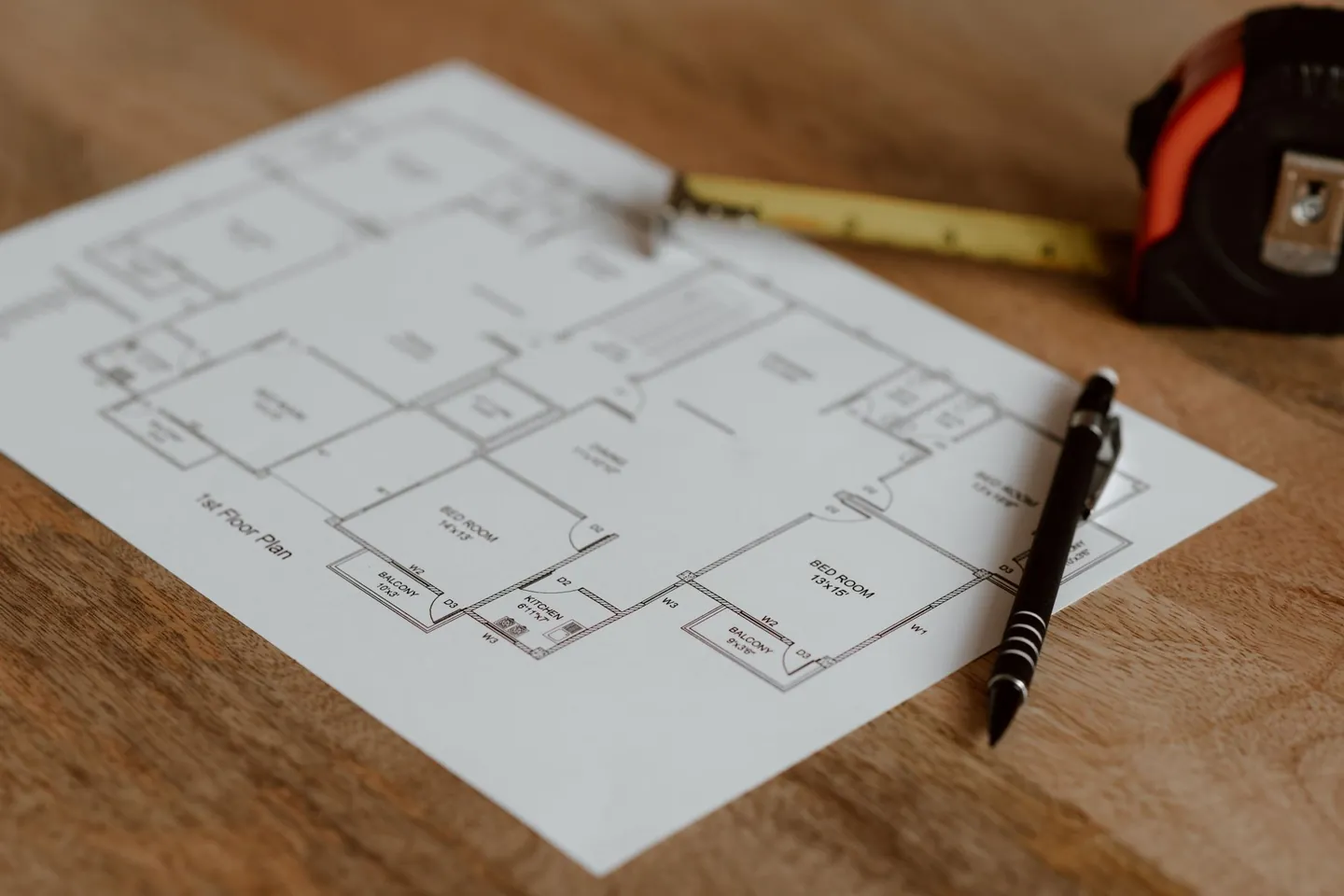
Analysed 10 November 2026 · National AI Centre, Guidance for AI adoption: foundations, dated October 2025 · OAIC guidance on commercially available AI products, updated 17 January 2025 · Building Commission NSW design obligations, updated 8 September 2026 · NCC 2025 clause A4G1 · all read 10 November 2026.
Key takeaways
- A tool returns a schedule, not a decision: What it can usefully hand over is a list of items, each tied to a page, clause or sheet. What each item means for the job is a judgement a person makes.
- The national guidance names a person: The National AI Centre's foundations guidance says: "Make a specific person accountable for every AI system your organisation uses", and "Keep clear records of the actions you take under each practice."
- Outputs should be marked as outputs: The OAIC asks: "Do your records clearly indicate where information is the product of an AI output and therefore a probabilistic assessment rather than fact?"
- Specifications need an edition check: NCC 2025 clause A4G1 says a reference to a document is to the edition listed in Schedule 2 or the register of alternative referenced documents. A cited edition that differs is a question for a person.
- Declarations stay with the registered person: Building Commission NSW states that a design compliance declaration covers construction-issued regulated designs, "not shop drawings or other drafts", and that only the supervising designer who signs it needs to be registered.
01
What a tool can extract,
and what a person confirms.
AI construction document review works differently on each document type, because each feeds a different decision.
Where a figure from a drawing reaches a quote, our page on AI reading construction drawings sets out what published tests measured.
| Document type | What a tool can extract | What a person must confirm, and why | Record to keep (our design) |
|---|---|---|---|
| Contracts and subcontracts | Parties, dates, defined terms, clause references for notices, time limits, payment and variations, set out as a schedule with page and clause | What each clause means for this job and whether a notice is due. The reading of a contract is a judgement with a cost if it is wrong, and no guidance we read hands it to a tool | Clause reference, the extracted text, the person who confirmed it and the date |
| Specifications | Cited standards and the edition each names, product and performance requirements, the section each sits in | Whether the edition cited is the one the NCC references for this job. NCC A4G1 ties a reference to the edition in Schedule 2 or the register of alternative referenced documents | Specification revision, edition found, edition it was checked against, who checked |
| Drawings | Title-block fields, sheet and revision lists, notes, schedules written as text | Any count, dimension or quantity that feeds a quote or an order, and that the revision is the current one. Our page on AI reading drawings sets out where published tests found the weak cases | Sheet and revision read, which values a person checked against the drawing |
| Consent and permit conditions | The list of conditions and the stage or certificate each one attaches to | Whether a condition has been met. That is for the consent authority or certifier, not for a tool or for whoever ran it | Condition number, status as recorded by a person, the evidence relied on |
| Certificates, test reports and product documents | Issuer, date, scope, the product and the standard each document cites | Whether the document covers the product and use on this job, and whether the certifier will accept it | Document, the scope a person confirmed, the date |
| NSW regulated designs and declarations | Which designs are attached to a declaration, their revision and their marked status | That only construction-issued regulated designs are declared. Building Commission NSW states the designs must be "construction issued regulated designs and not shop drawings or other drafts" | Design revision, the declaring practitioner, the date lodged |
02
What the output
should look like.
An AI document review is easier to check when every item it returns says where it came from and whether a person has confirmed it.
The OAIC also states: "Due diligence for AI products should not amount to a 'set and forget' approach." Checking a sample of confirmed items against the source documents over time is one way a business could act on that.
- Each item points to its source: Document, revision, page and clause or sheet, so a person can open the original and compare. Our design.
- Each item is marked as AI output until confirmed: The OAIC asks whether records "clearly indicate where information is the product of an AI output and therefore a probabilistic assessment rather than fact". Its guidance is about personal information; we apply the same marking to every extracted item.
- Changes between revisions are listed, not merged: Where a later revision changes a date, a cited edition or a condition, both values stay visible until a person picks one. Our design.
- Personal information is flagged: Contracts and title blocks can carry names, addresses and contact details. The OAIC states that privacy obligations "will apply to any personal information input into an AI system, as well as the output data generated by AI (where it contains personal information)".
03
Which step
a named person confirms.
The National AI Centre's Guidance for AI adoption: foundations, which the Voluntary AI Safety Standard page on the Department of Industry, Science and Resources site says "evolves the Voluntary AI Safety Standard", sets out who should be responsible and when a person steps in. As read on 10 November 2026, it says the following.
Which decisions are high-stakes is for each business to set. In our reading, a clause relied on for a notice, an edition relied on for compliance and a quantity relied on for a price are the obvious candidates. Our page on the AI adoption guidance reads all six practices as construction records.
- One accountable person per system: "Make a specific person accountable for every AI system your organisation uses."
- Oversight that matches the stakes: "Make sure a person oversees your AI system in a way that matches how much autonomy the system has, and how high the stakes are. This could mean automated monitoring for low-stakes applications, and mandatory human review for high-stakes decisions."
- Points where a person can stop it: "Make sure you have clear intervention points where humans can pause, override, roll back or shut down AI systems if needed."
- A register and a record: "Create and maintain an AI register", and "Keep clear records of the actions you take under each practice."
- Proof from the supplier: "If you're buying an AI system, ask the developer or supplier to show proof that it's been properly tested."
04
Declarations stay with
the person the law names.
Construction sign-offs name a person, and an AI review of a design set does not change who that is. Building Commission NSW pages, as read on 10 November 2026, show where the line sits for regulated designs in NSW.
Our page on construction sign-offs and AI found that none of the instruments it read mentions AI; each places the declaration on a named kind of person. Nothing here changes that. A tool can list which designs sit under a declaration; it does not make one.
- Developing is not declaring: "Remember, you don't have to be registered to develop the designs; only the supervising designer who will sign off on the design compliance declaration needs to be registered." (Design practitioner obligations, updated 8 September 2026)
- Final designs only: The designs declared "must be construction issued regulated designs and not shop drawings or other drafts".
- Who may lodge: "Design practitioners must be registered to prepare regulated designs and design compliance declarations." Building practitioners lodge them on the NSW Planning Portal, and "An appropriate practitioner cannot make or lodge a building compliance declaration." (Building classes and roles, updated 29 October 2026)
05
Specifications cite standards.
Check the edition, not the text.
Specifications for Australian construction work often cite Australian Standards by number and year. NCC 2025 clause A4G1, as read on 10 November 2026, fixes which edition the NCC means.
Whether a contract requires a different edition from the one the NCC references is a contract question. Our page on the two registers covers how Schedule 2 and the alternative register interact.
- The listed edition: A4G1(1): a reference in the NCC to a document refers to the edition or issue and any amendment listed in Schedule 2 or in the register of alternative referenced documents.
- A newer edition is not automatically referenced: A4G1(3): where a new edition, issue or amendment of a primary referenced document is not listed in either, it is not referenced for the purposes of the NCC.
- What a tool can do: List each standard and year a specification cites, and set them beside the editions listed for the NCC edition the job is assessed under. A person decides what a mismatch means for the job.
What we would put in a system
A system-design recommendation for a construction business using AI to review contracts, specifications and drawings: one record per extracted item, with its source and its confirmation kept together.
Where agents help here is narrow. An agent can build the schedule, link each item to its page, and list what changed between two revisions, and a person confirms each item a decision rests on. No agent decides what a clause means, whether a condition is met, which edition a contract requires, or whether a design may be declared.
| Field | What it holds | Label |
|---|---|---|
| Source | Document, revision, page, clause or sheet | Our design |
| Extracted value | The text or figure the tool returned, unedited | Our design |
| Marked as AI output | Yes until a person confirms | Suggested by guidance (OAIC question on AI outputs) |
| Confirmed by, and date | The named person and when | Suggested by guidance (National AI Centre: accountable person, keep clear records) |
| Decision it supports | Notice, quote, order, compliance check or declaration | Our design |
| Edition check | For cited standards: edition found, edition listed for the NCC edition applied | Our design, following NCC A4G1 |
| Tool and version | The system used and its version or date | Suggested by guidance (National AI Centre: AI register) |
- Document intelligence: How we read construction documents into structured records.
- AI audit trail for construction records: What a record of an AI-assisted step needs to hold.
- Construction sign-offs name a person: Who each instrument places the declaration on, and what it says about AI.
- Two registers, one standard edition: How NCC Schedule 2 and the alternative register decide which edition applies.
Questions worth asking
of your own document review
For a builder: when a notice date came from a contract summary, who checked it against the clause?
The National AI Centre asks for a specific accountable person for every AI system and clear records. A record of who checked the clause, and when, is our design suggestion. General information as read on 10 November 2026, not legal advice.
For a contract administrator: does your schedule show which items a person has confirmed?
The OAIC asks whether records clearly indicate where information is an AI output rather than fact. A confirmed or unconfirmed flag on each item is one way to show it. General information as read on 10 November 2026.
For a design practitioner in NSW: which revision did the declaration cover?
Building Commission NSW states declarations cover construction-issued regulated designs, not shop drawings or other drafts. A review tool can list revisions; the registered practitioner declares. General information as read on 10 November 2026, not legal advice.
For an estimator: which quantities in your last quote came from an AI reading, and which did a person count?
Our page on AI reading construction drawings sets out where published tests found counts weaker than text. Recording which values a person checked is our design. General information as read on 10 November 2026.
Questions people ask
about AI construction document review
What can AI document review do for construction documents?
It can read contracts, specifications and drawings and list items such as dates, clause references, cited standards, title-block details and conditions, each linked to its page. A person confirms the items a decision rests on. The National AI Centre's guidance asks for meaningful human oversight matched to the stakes. As read on 10 November 2026.
Can AI review architecture and construction documents for NCC compliance?
A tool can list what a document cites, such as standards and their editions, and compare them with the editions NCC 2025 clause A4G1 points to. Whether a design complies is for the designer, the certifier and, in NSW, the registered practitioner who declares it. General information as read on 10 November 2026, not legal advice.
Who is responsible when an AI document review misses something?
The National AI Centre's guidance says to make a specific person accountable for every AI system an organisation uses. Legal responsibility depends on the contract and the law that applies, which this does not determine. General information as read on 10 November 2026, not legal advice.
Does privacy law apply to AI review of construction documents?
Where documents contain personal information and the business is covered by the Privacy Act, the OAIC states that privacy obligations apply to personal information input into an AI system and to outputs that contain it. Its guidance was updated on 17 January 2025. As read on 10 November 2026; general information, not legal advice.
What this analysis
does and does not show.
Evidence note
- What it shows
- What the National AI Centre's foundations guidance and the OAIC's guidance on commercially available AI products say about accountability, oversight and records for AI outputs; what Building Commission NSW says about who declares regulated designs; what NCC 2025 clause A4G1 says about referenced editions; and a document-by-document split between what a tool can list and what a person confirms, as read on 10 November 2026.
- Key facts quoted
- National AI Centre: a specific accountable person for every AI system; meaningful human oversight; mandatory human review for high-stakes decisions; keep clear records. OAIC: records that indicate AI output as a probabilistic assessment rather than fact. Building Commission NSW: construction-issued regulated designs, not shop drawings or other drafts. NCC A4G1(1) and (3).
- We tested no tool and make no claim about how accurately any tool extracts any field.
- The National AI Centre guidance and the OAIC guidance are guidance, not law. The OAIC guidance is written about personal information; applying its output-marking question to all extracted items is our design.
- The NSW pages describe the regulated-design scheme for the building classes it covers. Other states' declaration rules were not read for this analysis; our page on construction sign-offs covers several.
- The record fields are our design unless labelled otherwise.
- General information, not legal advice.
What to watch next
- 10 December 2026: Privacy policy content about some automated decisions (APP 1.7 to 1.9) commences for APP entities. Our page on that deadline covers who it reaches.
- The National AI Centre guidance: The guidance was published on 21 October 2025 and its PDF is dated October 2025; the PDF is listed as published 5 May 2026. A business relying on it can record the version it read.
Bring us one document set
and the decision built on it.
Send us a contract, specification or drawing set and the notice, quote or check that relied on it. We will show what an item-by-item record would hold, which items a person would confirm, and where the edition check would sit.
General information about national AI guidance, OAIC guidance, NSW regulated designs and NCC 2025 clause A4G1, as read on 10 November 2026. Not legal advice. It does not assess any tool, document or declaration.
Sources
Suggested citation: National AI Centre, Guidance for AI adoption: foundations; OAIC, Guidance on privacy and the use of commercially available AI products (updated 17 January 2025); NCC 2025 cl A4G1; as read 10 November 2026. Derived figures: none.
- National AI Centre - Guidance for AI adoption: foundations: Dated October 2025; PDF listed as published 5 May 2026 · read 10 November 2026 · Government guidance
- OAIC - Guidance on privacy and the use of commercially available AI products: Published 21 October 2024, updated 17 January 2025 · read 10 November 2026 · Regulator guidance
- Department of Industry, Science and Resources - Voluntary AI Safety Standard: Published 5 September 2024, updated 2 December 2025 · read 10 November 2026 · Government guidance
- Building Commission NSW - Design practitioner obligations: Last updated 8 September 2026 · read 10 November 2026 · Regulator guidance
- Building Commission NSW - Building classes and roles of professionals: Last updated 29 October 2026 · read 10 November 2026 · Regulator guidance
- Australian Building Codes Board - NCC 2025 Part A4: Clause A4G1 · read 10 November 2026 · Code text
RELATED READING
Other readings on the same records.
- A free AI tool reads your tender. Check who else can: What the OAIC recommends on entering personal information into free AI tools, the Privacy Act tests, and what to check in a tool's terms. (AI Governance & Compliance)
- Before a scheduling agent runs: who can stop it, and what turns it off: The national guidance asks for oversight, intervention and decommissioning criteria to be documented before implementation, not after an incident. (AI Governance & Compliance)
- How many people work in construction? The ABS counts, and why they differ: 1,403,700 in the August quarter 2026 on the ABS Labour Force Survey, 1,342,100 in the June quarter Labour Account: what each series counts, ten years of the trend, and by state. (Labour & Trades)