INSIGHT · AI GOVERNANCE & COMPLIANCE
AI site-safety cameras:
the camera flags,
a person decides,
some laws want notice first.
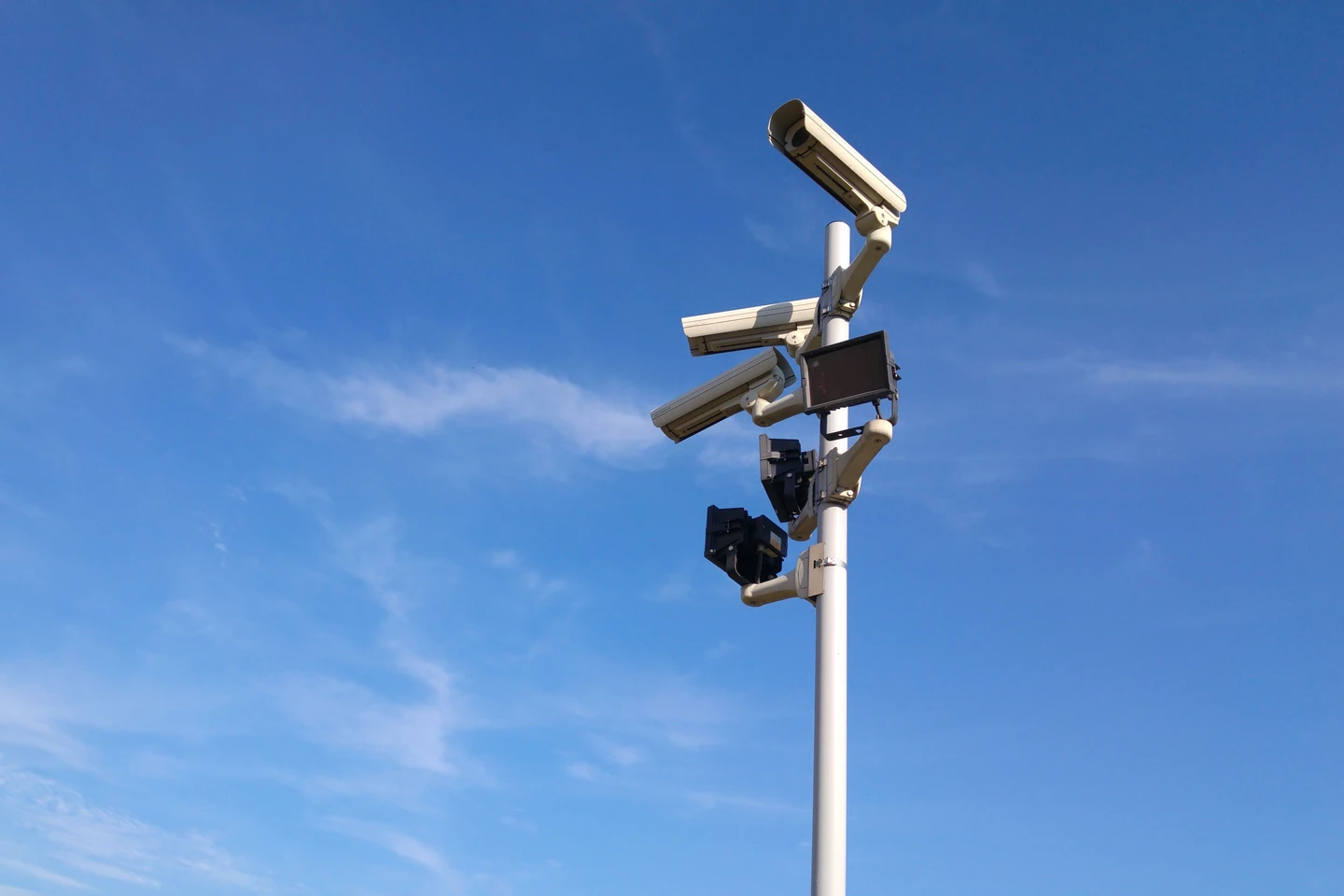
AI site-safety monitoring runs computer vision over camera footage and outputs flags: a frame, a label such as a person inside a marked exclusion zone, and a time. A person decides what each flag means and what happens next. Before cameras go up, the ACT's Workplace Privacy Act 2011 requires written notice to workers at least 14 days ahead (or within a shorter period a worker agrees to), visible cameras and a sign at each entrance, and treats a principal contractor as a subcontractor's employer. Victoria and the NT restrict filming a private activity by a person who is not a party to it, without the consent of each party; SA restricts it without the consent of each party; WA restricts it unless the person filming is a party and each principal party consents, subject to other exceptions. NSW's Act could not be read on 16 November 2026.
Analysed 16 November 2026 · Workplace Privacy Act 2011 (ACT), Republication No 6 · Surveillance Devices Act 1999 (Vic), Version 048 · Surveillance Devices Act 2016 (SA), version 21.9.2023 · Surveillance Devices Act 1998 (WA), Version 02-g0-00 · Surveillance Devices Act 2007 (NT), in force at 1 June 2026 · Invasion of Privacy Act 1971 (Qld) · Listening Devices Act 1991 (Tas) · Workplace Surveillance Bill 2005 (NSW), first print · Privacy Act 1988 (Cth), Compilation No. 104 · Voluntary AI Safety Standard and Guidance for AI Adoption · NSW Act text and OAIC pages not verified · all read 16 November 2026.
Key takeaways
- The system produces flags, not decisions: A computer vision model reads frames and labels what it detects. Guardrail 5 of the Voluntary AI Safety Standard asks for "meaningful human oversight", and the Guidance for AI Adoption states that the person overseeing a system should know "what they need to do to override the system if something goes wrong". Neither document says a model may decide what happens to a worker.
- The ACT has the most specific rule, and it reaches subcontractors: Workplace Privacy Act 2011 (ACT) s 13: written notice at least 14 days before surveillance starts (or within a shorter period the worker agrees to), stating the kind of device, how and when it runs, whether it is continuous, and the purposes the records may be used for. Section 15: the camera clearly visible and a sign at each entrance. Section 8 gives the example "principal contractor is an employer of a subcontractor".
- Four jurisdictions restrict filming a private activity: Victoria (s 7), South Australia (s 5), WA (s 6) and the NT (s 12) each restrict using an optical surveillance device to record or observe a private activity, with defined exceptions. In Victoria and the NT the restriction applies to a person who is not a party to the activity, without the consent of each party; in SA it applies without the consent of each party; in WA, consent of each principal party is an exception only where the person filming is a party to the activity (s 6(3)). Victoria's definition of private activity excludes an activity carried on outside a building, and its s 9B bars employer cameras in toilets, washrooms, change rooms and lactation rooms.
- Queensland's and Tasmania's Acts read cover sound, not images: The Invasion of Privacy Act 1971 (Qld) s 43 and the Listening Devices Act 1991 (Tas) s 5 regulate listening devices and private conversations. Neither Act read contains an optical surveillance provision. A camera that also records sound is the part those Acts reach.
- Face matching turns footage into sensitive information: Privacy Act 1988 s 6 lists "biometric information that is to be used for the purpose of automated biometric verification or biometric identification" and "biometric templates" as sensitive information, which APP 3.3 bars an APP entity from collecting without consent unless an exception applies. Whether the Act applies to a given business, including the small business and employee records exemptions, is not determined here.
- We would keep a notice record per camera and a decision record per flag: Our system-design recommendation: each camera carries its location, the notice and the date it was given, the sign, what the model labels and who reviews; each flag carries the frame, the model version, the reviewer and what was decided.
01
What the system reads,
what it outputs, who decides.
AI safety monitoring on a construction site is a camera feed passed through a model that labels frames. Each output is a draft observation. The table is our application of the national AI guidance to the outputs these systems commonly produce; no publisher classifies them this way, and no accuracy is claimed for any system.
None of the surveillance or privacy statutes read mentions AI. They regulate the camera, the notice, the place and the information. The model adds a second question on top of the surveillance law: who reviews what it says before anything happens to a worker.
| What it reads | What it outputs | Who decides | Record kept |
|---|---|---|---|
| Video from a fixed camera over a work zone with operating plant | A flag: frame, label (for example a person inside a marked exclusion zone) and time | A named supervisor decides whether the flag is real and what, if anything, is done on site | Frame, label, model version, reviewer, decision, time |
| Video at a gate or work front | A flag that a person appears to be without a hard hat or high-visibility clothing | A supervisor checks before any conversation with the worker. Under ACT s 22 a surveillance record may be used for adverse action only if the s 13 notice said so | Flag, review outcome, whether the worker was spoken to and by whom |
| Video of an edge, opening or barrier line | A flag that an expected barrier appears to be missing | A person inspects the location; the flag is a prompt, not an inspection | Flag, inspection note, close-out time |
| Counts across many frames | A summary: how many people entered a zone, at what times | A manager reads the trend; the count is not a finding about any person | Report, the period it covers, model version |
| Faces matched to a list of known people | An identity match | If used, a person confirms every match; the biometric information is sensitive information under Privacy Act s 6 | Consent record, match, confirmation, retention date |
02
Camera surveillance rules,
state by state.
Workplace camera surveillance in Australia is regulated state by state. Only the ACT instrument read sets a written notice period for camera surveillance of workers; the surveillance devices Acts of Victoria, South Australia, WA and the NT restrict optical recording of private activities; the Queensland and Tasmanian Acts read regulate listening devices only. Each cell is as read on 16 November 2026.
"Private activity" is defined differently in each Act. In Victoria it excludes an activity outside a building and one the parties ought reasonably to expect may be observed by someone else; in WA and the NT it excludes an activity the parties ought reasonably to expect may be observed. Whether any activity on an open site is a private activity is a legal question for the business and its advisers, not a conclusion of this table. Listening device provisions in the Victorian, South Australian, WA, NT and ACT legislation were not analysed.
| State | Notice to workers before camera surveillance | What the Act restricts for cameras | Areas named as off limits | Instrument and version read |
|---|---|---|---|---|
| NSW | NSW: in the Workplace Surveillance Bill 2005 as introduced, written notice at least 14 days before surveillance starts, or a lesser period the employee agrees to, stating the kind, how, when, whether continuous or intermittent and whether limited or ongoing (cl 10); cameras clearly visible and signs at each entrance (cl 11). The Act as in force: not verified (16 Nov 2026) | NSW: Surveillance Devices Act 2007 not verified (16 Nov 2026) | NSW: in the bill, any change room, toilet facility or shower or other bathing facility at a workplace (cl 15). Act not verified | Workplace Surveillance Bill 2005, first print, NSW Parliament, read 16 Nov 2026. Workplace Surveillance Act 2005: not verified (16 Nov 2026) |
| Victoria | Victoria: no workplace notice provision in the Act read | Victoria: no knowingly installing, using or maintaining an optical surveillance device to record visually or observe a private activity to which the person is not a party without the express or implied consent of each party (s 7). "Private activity" excludes an activity carried on outside a building (s 3) | Victoria: an employer must not knowingly use an optical surveillance or listening device to observe or record a worker in a toilet, washroom, change room or lactation room (s 9B) | Surveillance Devices Act 1999, Authorised Version No. 048, as at 10 December 2025, read 16 Nov 2026 |
| Queensland | Queensland: no workplace surveillance notice provision in the instrument read | Queensland: the Act read regulates listening devices used to record a private conversation (s 43); it contains no optical surveillance provision | Queensland: none in the Act read | Invasion of Privacy Act 1971, in force version (register link dated 1 July 2024), read 16 Nov 2026 |
| South Australia | South Australia: no workplace notice provision in the Act read | South Australia: no knowingly installing, using or maintaining an optical surveillance device on premises, a vehicle or a thing to record visually or observe a private activity without the express or implied consent of each party (s 5(1)); an exception applies where the use on premises is reasonably necessary to protect the person's lawful interests (s 5(4)(b)) | South Australia: none named in the Act read | Surveillance Devices Act 2016, version 21.9.2023, read 16 Nov 2026 |
| WA | WA: no workplace notice provision in the Act read | WA: no installing, using or maintaining an optical surveillance device to record visually or observe a private activity to which the person is not a party, or to record visually one to which the person is a party (s 6(1)); exceptions include unintentional recording (s 6(2)(e)) and, only where the person filming is a party to the activity, the consent of each principal party (s 6(3)(a)); a person who is not a party has no consent exception in s 6 | WA: none named in the Act read | Surveillance Devices Act 1998, Version 02-g0-00, as at 5 April 2023, read 16 Nov 2026 |
| Tasmania | Tasmania: no workplace notice provision found | Tasmania: the Act read regulates listening devices used to record or listen to a private conversation (s 5); it contains no optical surveillance provision | Tasmania: none in the Act read | Listening Devices Act 1991, consolidated version in force, read 16 Nov 2026 |
| ACT | ACT: written notice at least 14 days before surveillance starts, or a shorter agreed period, or before a new worker starts (s 13(3)); good-faith consultation for the notice period (s 14); no notice needed for optical surveillance at a workplace that is not the worker's usual workplace (s 13(2)) | ACT: the camera, or a casing that indicates one, clearly visible, and a sign clearly visible at each entrance (s 15); failing s 13 or s 15 is an offence, 20 penalty units (s 18) | ACT: toilet, change room, shower or bathing facility, parent or nursing room, prayer room, sick bay, first-aid room (s 41) | Workplace Privacy Act 2011, Republication No 6, effective 23 June 2021, read 16 Nov 2026 |
| NT | NT: no workplace notice provision in the Act read | NT: an offence to install, use or maintain an optical surveillance device to monitor, record visually or observe a private activity to which the person is not a party, knowing it is without the express or implied consent of each party; 250 penalty units or 2 years (s 12) | NT: none named in the Act read | Surveillance Devices Act 2007, as in force at 1 June 2026, read 16 Nov 2026 |
03
The ACT rule, read
for a building site.
The Workplace Privacy Act 2011 (ACT) is the instrument read that speaks most directly to a site where several businesses' workers share one set of cameras.
The NSW bill of 2005 defined "employee" by the Industrial Relations Act 1996 plus some extensions, and its "employer" included another person for whom an employee performs work under a contract or arrangement with the employee's employer, "such as a labour hire contract" (cl 3). Whether the NSW Act as in force reaches subcontractors on a shared site could not be checked against the Act on 16 November 2026.
- Who is a worker: Section 7: "an individual who carries out work in relation to a business or undertaking, whether for reward or otherwise, under an arrangement with the person conducting the business or undertaking", with examples including an employee, an independent contractor and a volunteer.
- Who is the employer: Section 8 includes a person who engages the worker to carry out work in the person's business or undertaking, with the examples "principal contractor is an employer of a subcontractor" and "host organisation is an employer of a labour hire worker".
- What the notice says: Section 13(4): the kind of device, how surveillance will be conducted, who will regularly be its subject, when it starts, whether continuous or intermittent, whether for a stated period or ongoing, the purposes for which records may be used and disclosed, and that the worker may consult. Section 13(5): it may be in the form of a policy.
- What the footage may be used for: Section 22(1) makes it an offence to use a surveillance record to take adverse action against the worker, unless the s 13 notice stated that it may be (s 22(2)). Section 22(3) limits other use and disclosure to listed purposes, including the employer's legitimate business activities and an imminent risk of death or serious injury.
- Where cameras may not point: Section 41 lists prohibited non-work areas: a toilet facility, a change room, a shower or other bathing facility, a parent or nursing room, a prayer room, a sick bay and a first-aid room. Penalty: 50 penalty units.
04
Where the Privacy Act
enters the footage.
Camera footage of identifiable people is personal information when an APP entity collects it. The Privacy Act 1988, Compilation No. 104 of 4 June 2026, adds three points that matter once a model is reading the frames.
The OAIC's guidance pages, including its guidance on commercially available AI products, could not be read on 16 November 2026, so the points above rest on the Act itself. Our earlier reading of that guidance, on 4 November 2026, is on our page about buying an AI estimating tool.
- Notice at collection (APP 5): APP 5.1 requires an APP entity to take reasonable steps to notify the individual of the APP 5.2 matters, or otherwise ensure they are aware, at or before collection or, if that is not practicable, as soon as practicable after. The matters include the entity's identity, the purposes of collection, and to whom it usually discloses such information.
- Biometric identification is sensitive information: Section 6 defines sensitive information to include "biometric information that is to be used for the purpose of automated biometric verification or biometric identification" and "biometric templates". APP 3.3 bars collecting sensitive information without consent unless an APP 3.4 exception applies. A system that only detects a person, without identifying who it is, raises a different question from one that matches faces.
- Two exemptions, neither determined here: Section 6D treats a business with annual turnover of $3,000,000 or less as a small business, subject to listed exceptions. Section 7B(3) exempts an act or practice of an organisation that is or was the individual's employer, where it is directly related both to a current or former employment relationship and to an employee record held by the organisation and relating to the individual. Whether either applies to a site camera that also records subcontractors and visitors is a question for the business and its advisers.
05
What the national AI
guidance adds.
Two Commonwealth documents, both live on 16 November 2026: the Voluntary AI Safety Standard, each page of which states that the Guidance for AI Adoption of 21 October 2025 "evolves" it, and the Guidance for AI Adoption itself. Neither is legislation, and neither says which an organisation should apply.
This agrees with our pages on buying an AI estimating tool and on AI agents in project management, both read against the same two documents on 4 November 2026: guidance, not law, and nothing in it moves responsibility for an output to a supplier.
- A named overseer with authority: Guardrail 5.1.1 and 5.1.2: accountability for each AI system assigned "to someone who shows suitable competence", with "sufficient authority to oversee, intervene and be effective". Guidance practice 6.1.4: training on "capabilities, limitations and failure modes and when human intervention is needed".
- Telling the people the system watches: Guardrail 6.1.2: "Create and communicate an organisational requirement to disclose the use of AI to impacted parties in a direct interaction or in a decision-making process." Guidance practice 4: "People should know when they're interacting with AI and understand when AI decisions affect them."
- A register entry for the system: Guidance practice 4.1.1 lists the inventory content, including accountable people, purpose, capabilities and limitations, acceptance criteria and test results, and dates of review.
- NSW digital work systems duties: not commenced, per SafeWork NSW: SafeWork NSW's page, read on 16 November 2026, states that only Schedule 1 [7], [9] and [11] of the Work Health and Safety Amendment (Digital Work Systems) Act 2026 commenced and that the remaining amendments commence "on proclamation after the Guidelines have been developed and published". The NSW legislation register could not be read that day. Once commenced, new s 21A names monitoring or surveillance among the risks a business must consider. Our page on the NSW digital work systems duties sets out the Act's text, including that the Act's own proclamation floor does not apply to s 21A.
What we would put in a system
Two records: one per camera before it goes live, one per flag after it fires.
Where agents help is narrow. A compliance agent can draft the notice from the camera register, check each camera against the state's listed areas, and draft the weekly list of flags still awaiting review. A person reviews every flag before anything happens to a worker, and decides whether a notice is adequate. No agent decides whether surveillance is lawful, whether a worker breached a rule, or what any safety response should be.
| Field | Why it is load-bearing |
|---|---|
| Camera location, field of view and whether it records sound | Optical and listening device provisions are separate in every Act read; Queensland's and Tasmania's reach only sound. |
| Notice given, to whom, on what date, and its text | ACT s 13 sets 14 days and the content; the NSW bill set 14 days. A dated copy shows the period was met. |
| Sign at each entrance, and when it went up | ACT s 15 and NSW bill cl 11. |
| Areas excluded from view | ACT s 41 and Victoria s 9B list them; a field-of-view check against the list is a dated record. |
| What the model labels, its version and the named reviewer | Guardrail 5 and Guidance practice 4.1.1: accountable person, capabilities and limitations. |
| Per flag: frame, label, reviewer, decision and time | Separates what the model said from what a person decided, and shows whether any adverse action used a record the notice covered. |
| Whether biometric identification is used, and the consent record | Privacy Act s 6 and APP 3.3. |
- How we deploy AI: Drafts and flags from agents; decisions from named people.
- AI audit trail for construction records: What to keep when an AI step touches a decision.
- NSW digital work systems duties: The monitoring and surveillance limb, and its commencement.
- Who made this decision?: The automated-decision disclosures added to APP 1.
Questions worth asking
of your own site cameras
For an ACT employer, including a principal contractor for a subcontractor's workers: does a dated register show, for each worker who needs notice, when written notice was given and which section 13 period applied?
Workplace Privacy Act 2011 (ACT) s 8 gives the example that a principal contractor is an employer of a subcontractor. Section 13 requires written notice at least 14 days before surveillance starts, or within a shorter period the worker agrees to, or before a new worker starts in the cases s 13(3)(c) covers, and s 13(2) removes the requirement for optical surveillance at a workplace that is not the worker's usual workplace. A dated notice register answers it. General information as read on 16 November 2026, not legal advice.
For a site manager: when the system flags a worker, who looks at the frame before anyone speaks to them?
Guardrail 5 asks for a named person with authority to intervene. In the ACT, s 22 restricts using a surveillance record for adverse action unless the notice said it may be. The flag record should show the reviewer and the decision.
For a builder working across states: does each camera's record say whether it records sound?
In Queensland and Tasmania the Acts read regulate listening devices, not cameras, so the microphone is what those Acts reach. Every other Act read regulates listening and optical devices separately.
For a director: does any system on your sites match faces to names?
Privacy Act s 6 treats biometric information used for automated identification as sensitive information, and APP 3.3 requires consent unless an exception applies. Whether the Act applies to the business is a separate question for its advisers.
Questions people ask
about AI construction safety monitoring
What does AI construction safety monitoring do?
It runs a computer vision model over camera footage and outputs flags: a frame, a label such as a person inside a marked exclusion zone or apparently without a hard hat, and a time. The flag is a prompt for a person. The Voluntary AI Safety Standard's guardrail 5 asks for a named overseer with authority to intervene.
Do you need to tell workers before installing AI safety cameras?
In the ACT, yes, subject to the exceptions in s 13: the Workplace Privacy Act 2011 s 13 requires written notice at least 14 days before surveillance starts or within a shorter period the worker agrees to, and s 15 requires visible cameras and a sign at each entrance, as read on 16 November 2026. The NSW Workplace Surveillance Bill 2005 as introduced set a 14-day notice; the NSW Act in force could not be read that day. The Victorian, SA, WA, NT, Queensland and Tasmanian Acts read set no workplace notice period. General information, not legal advice.
Can cameras be used in site toilets or change rooms?
The Acts read name these areas. Victoria's Surveillance Devices Act 1999 s 9B bars an employer's camera or listening device in a toilet, washroom, change room or lactation room. The ACT's Workplace Privacy Act 2011 s 41 lists toilets, change rooms, showers, parent or nursing rooms, prayer rooms, sick bays and first-aid rooms. The NSW bill of 2005 listed change rooms, toilets and showers.
Is facial recognition on a construction site legal in Australia?
No single answer covers it. Under the Privacy Act 1988 s 6, biometric information used for automated biometric identification is sensitive information, which APP 3.3 bars an APP entity from collecting without consent unless an exception applies; state surveillance Acts apply as well. Whether a particular use is lawful is a matter for the business and its advisers.
Who is responsible if an AI safety camera misses a hazard?
Nothing in the documents read moves responsibility to a supplier or to the model. The national AI guidance asks for a named, competent person to oversee each AI system, with authority to intervene. Work health and safety duties were not analysed here; what any duty requires on a given site is a matter for the business and its advisers.
What this analysis
does and does not show.
Evidence note
- What it shows
- What the workplace surveillance and surveillance devices instruments of the ACT, Victoria, South Australia, WA, the NT, Queensland and Tasmania say about cameras, notice and excluded areas, as read on 16 November 2026; what the NSW bill of 2005 said; what the Privacy Act 1988 says about biometric information and notice; and what the two national AI documents ask of an organisation using AI.
- Key facts quoted
- ACT Workplace Privacy Act 2011 ss 7, 8, 13, 14, 15, 18, 22, 41. Vic Surveillance Devices Act 1999 ss 3, 7, 9A, 9B. SA Surveillance Devices Act 2016 s 5. WA Surveillance Devices Act 1998 ss 3, 6. NT Surveillance Devices Act 2007 s 12. Qld Invasion of Privacy Act 1971 s 43. Tas Listening Devices Act 1991 s 5. NSW Workplace Surveillance Bill 2005 cll 10, 11, 15. Privacy Act 1988 ss 6, 6D, 7B(3), APP 3.3, APP 5. Voluntary AI Safety Standard guardrails 5 and 6; Guidance for AI Adoption practices 4 and 6.
- The NSW legislation register and AustLII returned HTTP 403 to automated access on 16 November 2026, so the NSW row rests on the Workplace Surveillance Bill 2005 as introduced, read from the NSW Parliament website. A bill as introduced may differ from the Act as passed and as amended since. The NSW Surveillance Devices Act 2007 was not read.
- The OAIC's guidance pages returned HTTP 403 on 16 November 2026 and were not read. The Privacy Act points rest on the Act itself.
- Listening device provisions in the Victorian, South Australian, WA, NT and ACT legislation, Commonwealth telecommunications law, WHS regulations and any industrial instrument or enterprise agreement were not analysed.
- "Private activity" is defined differently in each Act, and whether any activity on a construction site is one is not determined here.
- No system, vendor or product is named, tested or assessed, and no claim is made about any system's accuracy.
- Nothing here is legal, privacy or safety advice. It does not determine whether any surveillance is lawful, whether any notice is adequate, whether the Privacy Act applies to any business, or what any WHS duty requires.
What to watch next
Only what the publishers have themselves stated.
- NSW digital work systems duties: SafeWork NSW states that the remaining amendments commence on proclamation after the Guidelines have been developed and published. They include s 21A, which refers to monitoring or surveillance (our page on the NSW duties, read against the Act). No date was stated on the page read on 16 November 2026.
- The two national AI documents: The Voluntary AI Safety Standard's pages remain live while stating that the Guidance for AI Adoption evolves them. A policy citing either needs the read date.
Bring us one site
and its camera plan.
Tell us where the cameras are, what the system flags and who reviews it. We will show you how a per-camera and per-flag record can hold camera locations, notice records, excluded-area checks and flag-review decisions; which rules apply to a particular site is a question for your advisers.
General information about published legislation and Australian Government guidance, as read on 16 November 2026 at the versions listed in the sources. Not legal, privacy or safety advice. It does not determine whether any surveillance is lawful or what any duty requires. The NSW Act and the OAIC pages were not verified.
Sources
Suggested citation: workplace surveillance and surveillance devices legislation of the ACT, Victoria, South Australia, WA, the NT, Queensland and Tasmania, the NSW Workplace Surveillance Bill 2005, the Privacy Act 1988 and the Commonwealth AI guidance, at the versions listed, as read 16 November 2026. Derived figures: none.
- ACT Legislation Register - Workplace Privacy Act 2011: Republication No 6, effective 23 June 2021 · read 16 November 2026 · Legislation register
- Victorian Legislation - Surveillance Devices Act 1999: Authorised Version No. 048, as at 10 December 2025 · read 16 November 2026 · Legislation register
- South Australian Legislation - Surveillance Devices Act 2016: Version 21.9.2023 · read 16 November 2026 · Legislation register
- Western Australian Legislation - Surveillance Devices Act 1998: Version 02-g0-00, as at 5 April 2023 · read 16 November 2026 · Legislation register
- NT Legislation - Surveillance Devices Act 2007: As in force at 1 June 2026 · read 16 November 2026 · Legislation register
- Queensland Legislation - Invasion of Privacy Act 1971: In force version (register link dated 1 July 2024) · read 16 November 2026 · Legislation register
- Tasmanian Legislation - Listening Devices Act 1991: Consolidated version in force · read 16 November 2026 · Legislation register
- NSW Parliament - Workplace Surveillance Bill 2005, first print: Bill as introduced, 2005 · read 16 November 2026 · Parliament record; not the Act as in force
- NSW Legislation - Workplace Surveillance Act 2005: Not verified (16 Nov 2026): the register refused automated access · Legislation register
- Federal Register of Legislation - Privacy Act 1988: Compilation No. 104 (C2026C00227), 4 June 2026 · read 16 November 2026 · Legislation register
- Department of Industry, Science and Resources - Voluntary AI Safety Standard, the 10 guardrails: No publication date on the page · read 16 November 2026 · Government guidance; guardrails 5 and 6 quoted
- National AI Centre - Guidance for AI Adoption: implementation guidance: Guidance published 21 October 2025 (as stated on the Voluntary AI Safety Standard page); the page's PDF download is marked published 05 May 2026 · read 16 November 2026 · Government guidance; practices 4 and 6 quoted
- SafeWork NSW - Work Health and Safety Amendment (Digital Work Systems) Act 2026: No modified date found · read 16 November 2026 · Regulator page
- OAIC - Guidance on privacy and the use of commercially available AI products: Not verified (16 Nov 2026): the site refused automated access · Regulator guidance
RELATED READING
Other readings on the same records.
- AI document review reads the set. A named person confirms what it found: By document type: what an AI tool can extract, what a person must confirm and why, and the record to keep, from national AI guidance and NSW rules. (AI Governance & Compliance)
- A free AI tool reads your tender. Check who else can: What the OAIC recommends on entering personal information into free AI tools, the Privacy Act tests, and what to check in a tool's terms. (AI Governance & Compliance)
- Profit on cost and margin on revenue: one profit, two percentages: Profit on cost divides profit by cost; a margin on revenue divides it by sales. 20% on cost is 16.7% on revenue, and "development margin" has no single published base. (Development & Reporting)