RESEARCH · PUBLICATIONS & AWARDS
Work you can check.
Peer-conference research, published under named authors and judged by the field. Every entry on this page is verifiable.
- Best Paper Award: AUBEA 2025
- Latest presentation: WSBE26, Melbourne
- Methods: Data mining, LLM, CV
- Applied to: Housing delivery
Commission research · Talk to our research team · Who we research with
Best Paper Award,
AUBEA 2025.
At the 48th Australasian Universities Building Education Association International Conference, this planning-approvals study won the Best Paper Award, sponsored by MDPI Sustainability.

Unlocking the Building Pipeline in a Housing Crisis: Data Mining South Australia's Planning Approval Processes
- Venue: University of Canberra
- Dates: 26 to 28 November 2025
- Authors: Yupeng Zhang, Xingyue Fang, Ruidong Chang, Liuyue Jiang
- Theme: Advanced Construction Project Management
What the winning paper found.
The research tackles the delivery side of Australia's housing crisis: not whether homes are approved, but how long approval takes and why.
- A first quantification: Data mining South Australia's planning approval records traced approval delays to procedural complexity rather than the merits of the application. The findings are now published in full as Chapter 2 of the Australia Housing Market White Paper (2026).
- A rigorous method: Approval processes were modelled with a generalised linear mixed-model (GLMM) framework over mined planning records, separating structural drivers from case-by-case noise.
- Evidence for reform: The findings give policymakers an empirical basis for targeted process reform: streamlining procedure can return significant time to the industry and accelerate housing delivery.
01
The findings, in an
industry white paper.
The AUBEA study is the basis of Chapter 2 of the Australia Housing Market White Paper (2026), published by RESI, the Australian Residential Construction Institute. It examines 20,000+ residential subdivision planning consent applications lodged through PlanSA, South Australia's statewide digital planning portal between January 2022 to June 2025, across 18 Adelaide metropolitan councils.
Data to 2025. Cyberate researchers are named in the white paper's core research team, and its Chapter 2 is synthesised from the AUBEA 2025 Best Paper study they authored. The white paper is published by RESI, not by Cyberate.
- What persists after controls: Assessment pathway, verification time, referrals, public notification and subdivision scale remain significant predictors of longer consent timelines once tested together.
- What weakens: Zone and location assumptions lose significance, dwelling-form effects are partly explained by pathway and notification, and tree removal and public holidays show no clear standalone effect.
- What it means for reform: Reforms aimed at workflow triggers are likely to deliver larger gains than reforms focused only on what is being built or where it is built.
The white paper in detail · Read it on the RESI Knowledge Hub ↗
From approval data
to drawing intelligence.
Presented at the World Sustainable Built Environment Conference 2026 in Melbourne: how large language models and computer vision turn design drawings into evidence for regulatory decisions.
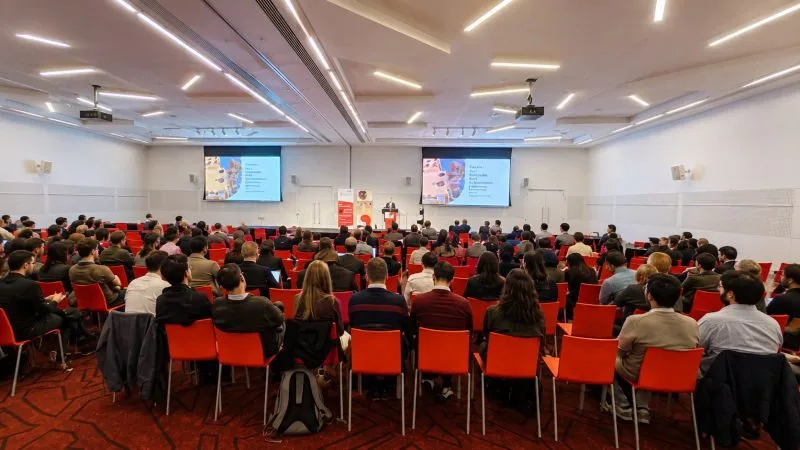
Peer-reviewed and amended over four revision rounds before final submission.
AI-Assisted Decision Support for Drawing-Based Residential Compliance Review: Integrating Large Language Models and Computer Vision
- Conference: WSBE26
- Venue: MCEC, Melbourne
- Presenter: Yupeng Zhang
- Co-authors: Ruidong Chang, Xingyue Fang, William Jiang
- Research question: Can design drawings become structured evidence for residential compliance decisions?
- Method: Large language models integrated with computer vision to interpret residential drawing sets.
- System implication: Defines how Document Intelligence reads drawings, with the final compliance decision kept with a human reviewer.
02
Four stages, and
a refusal to decide.
The contribution is not a model. It is a method for turning a regulatory requirement into something a drawing can actually prove - and for stopping where the proof runs out. The research setting is South Australia's Planning and Design Code.
The work reframes automated compliance checking as an auditable decision-support problem: AI assistance combined with explicit evidence and provenance, to improve consistency and defensibility in routine 2D-based review.
The four-stage compliance review workflow: Specify turns clauses and real assessment outcomes into a checking specification; Measure reads the drawing as vector geometry to produce metrics and evidence; Compare retrieves the controls governing that property and reports value, threshold and margin; Report returns the requirement with its evidence. A provenance thread runs under all four stages, so every reported number traces back to the clause it was compared against and the drawing evidence it came from. The chain ends at a person, who decides - there is no automated pass or fail.
- Specify: Planning Code clauses are aligned with the considerations that recur in real assessment outcomes, producing a machine-executable checking specification rather than a rulebook summary. What must be measured is fixed here - not generated at runtime by a language model.
- Measure: The drawing is read as vector geometry rather than as an image, and only the entity types the checks require are recognised. Compliance is judged in millimetres, so the representation has to preserve millimetres.
- Compare: The controls that govern this specific property are retrieved, then presented beside the measurement with the margin between them, the clause reference and the source wording.
- Report: Flagged items return the requirement, the supporting evidence and the adjustment types consistent with that requirement. No automated pass or fail is issued at any stage.
03
Automate only what the drawing can actually prove.
A code tells you what a rule says; an assessment outcome tells you which rules councils actually raise. Coding real decisions is what turns an unbounded rulebook into a finite, ranked list of checks - and it is why the scope is defensible rather than arbitrary. The evidence base: More than 50 assessed South Australian residential cases, each pairing the plan drawing with its official assessment outcome, supplied through DDDI Group and its industry partners.
Recurring checking items were graded by a single question: can a two-dimensional drawing actually prove this? The grading used how often each item appeared across the real case set, not intuition. It converts an open-ended "automate compliance" brief into a finite, defensible scope on evidence rather than instinct. The same move works for any rule engine, contract review system or policy checker: enumerate the rules, ask what artefact would prove each one, and cut where the artefact stops being sufficient.
| Grade | What it means | How it is handled |
|---|---|---|
| A | Deterministic geometry the drawing already contains | Automated, with evidence attached to every number |
| B | Provable once one named human input is supplied | Kept in scope with the missing input named - each becomes Class A the day that input can be automated |
| C | Context or judgement a drawing cannot settle | Re-specified as an advisory flag with an explicit threshold, never as a verdict |
It fills a schema.
It never writes the conclusion.
The language model is constrained to one job: populate fixed fields from retrieved source text, and say so when a field is absent rather than inferring a plausible value. Six rules enforce that, and each closes a specific failure mode.
| Rule | What it prevents |
|---|---|
| Use only the retrieved text | The model reaching for another jurisdiction's rules from training data |
| Do not infer or invent | A plausible threshold that no clause actually states |
| Say "not specified" when a field is missing | A silent omission instead of a reviewable gap |
| Keep the source wording verbatim | A reviewer having to leave the report to verify an extraction |
| Return multiple controls as separate records | Two different thresholds merged into one averaged value |
| Emit structured output only | Unverifiable narrative commentary in a high-stakes decision |
Six things travel with
every reported number.
The reviewer is not shown a decontextualised summary. They are shown a comparison where the interpreted control traces back to its retrieved source, and the reported metric traces back to the drawing evidence underneath it.
The demonstration established that this workflow is feasible and that its evidence is traceable. It is not a reliability or generalisation result, and the research does not present it as one.
- The measurement: The value derived from the drawing itself.
- The control: The threshold or parameter it is being compared against.
- The margin: The distance between the two, stated rather than left to be inferred.
- The clause reference: Which requirement the control came from, citable.
- The source wording: That clause's text verbatim, so the extraction can be checked without leaving the report.
- The evidence and its flags: The linked drawing evidence, plus the quality flags attached to the measurement.
Each paper points at a running system.
Publications here are not an endpoint. Each one defines how a Cyberate capability works, and each capability feeds data back into the next research question.
Each publication is linked to a Cyberate system, not left as an academic endpoint.
| Publication | Recognition | What it studied | Where it ships | |
|---|---|---|---|---|
| Unlocking the Building Pipeline in a Housing Crisis | Best Paper Award, AUBEA 2025 | Procedural complexity behind SA planning approval delays | Feasibility Intelligence, Compliance & Approvals | View → |
| AI-Assisted Decision Support for Drawing-Based Compliance Review | Presented at WSBE26, Melbourne | LLMs and computer vision for drawing-based compliance review | Document Intelligence, Compliance & Approvals | View → |
Questions we get about the research.
Where can I read the papers?
Both papers were presented at international peer conferences. The AUBEA paper's findings are also published, in synthesised form, as Chapter 2 of the Australia Housing Market White Paper (2026) on the RESI Knowledge Hub. Proceedings links are added here as they are published; until then, both papers are available on request through our research team.
Who conducts Cyberate's research?
Research is conducted with university partners and published under named authors, including Cyberate's own team. The author lists on this page match the official conference records.
Does this research shape the products?
Yes. The AUBEA paper's approval-delay analysis informs Feasibility Intelligence and Compliance & Approvals, and the WSBE26 work defines how Document Intelligence reads drawings.
Can we commission research like this?
Yes. Market studies, operational data analysis and methodology research run through the same practice, with scope and method agreed up front.
How should the papers be cited?
AUBEA paper: Zhang, Y., Fang, X., Chang, R., & Jiang, L. (2025). Unlocking the Building Pipeline in a Housing Crisis: Data Mining South Australia's Planning Approval Processes. 48th AUBEA International Conference, University of Canberra. WSBE26 paper: Zhang, Y., Chang, R., Fang, X., & Jiang, W. (2026). AI-Assisted Decision Support for Drawing-Based Residential Compliance Review: Integrating Large Language Models and Computer Vision. WSBE26, Melbourne.
Research with somewhere to go.
The same questions these papers answer academically, our systems answer operationally. See how the practice connects to what we build, or bring us a question of your own.